Technical
Apr 15, 2026
What to Look for When Buying an Off-Road Bus: A Buyer’s Guide
Content
“Off-road” means different things—but the wrong bus will fail fast when conditions get real. This guide shows how to choose an off road bus with the right specs, not just marketing claims.
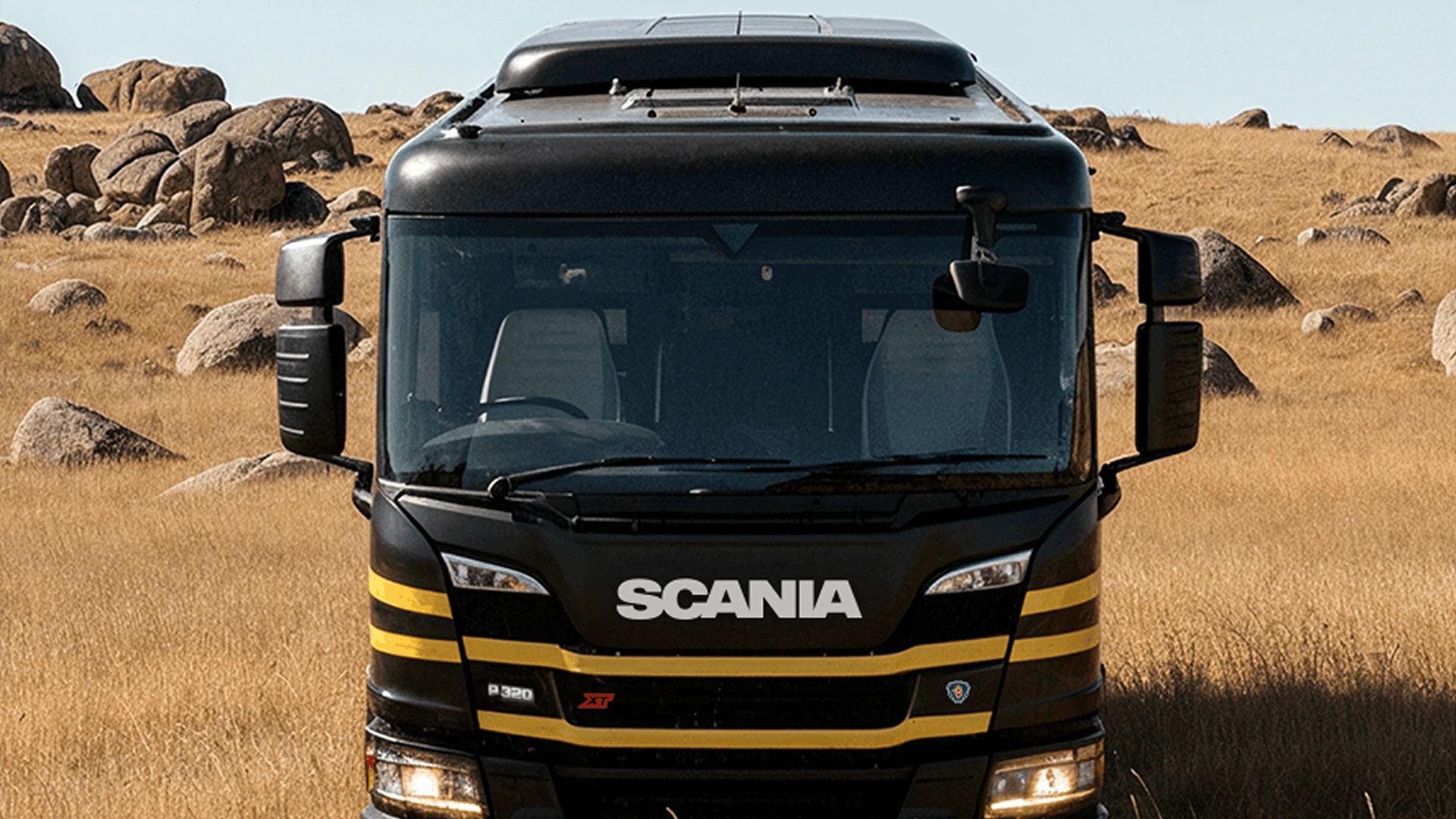
“Off-road” is a word that gets used loosely.
Some operators mean a bus that can handle a graded gravel road in the dry. Others mean a vehicle that needs to push through soft sand, river crossings, and corrugations that have shaken sealed-road buses to pieces.
The right off-road bus for your operation depends entirely on what “off-road” means in your context. This guide walks through the questions to ask, the specs that matter, and the difference between a vehicle that’s marketed as off-road and one that’s genuinely engineered for it.
If you’re early in your research, start with our Complete Guide to 4×4 Buses in Australia for the broader context.
Start with the route, not the bus
Most bad buying decisions start with looking at vehicles before defining the job.
Before you compare any specifications, document the route conditions the bus will face:
What percentage of operating kilometres are sealed vs unsealed?
Of the unsealed sections, what surfaces? Gravel, dirt, sand, mud, rock?
What’s the worst grade the bus will need to climb, loaded?
What’s the worst river or creek crossing on the route?
How corrugated do the worst sections get?
What’s the surface temperature range across the year?
How far is the route from the nearest service centre?
What’s the daily kilometre count, and how many hours behind the wheel?
A vehicle that handles a remote tourism route in the Top End is a different specification to one that runs school students on rural Victorian roads, even though both are “off-road” buses. Get the route documented before you start shopping.
The chassis: where everything starts
The chassis is the foundation. Every other decision flows from it.
For genuine off-road work, look for chassis from heavy commercial manufacturers with proven 4×4 platforms. Scania, Mercedes, MAN, and Isuzu are the common references in the Australian market. Each has different strengths.
Two questions to ask about any chassis:
Was 4×4 capability part of the original design, or added on? A chassis engineered as a 4×4 from day one will have the drivetrain, suspension, and structural reinforcement working together. A 2WD chassis with 4WD components retrofitted creates unknown failure modes.
What’s the local parts and service support like? A chassis that’s beautifully engineered but has no local support is a problem waiting to happen.
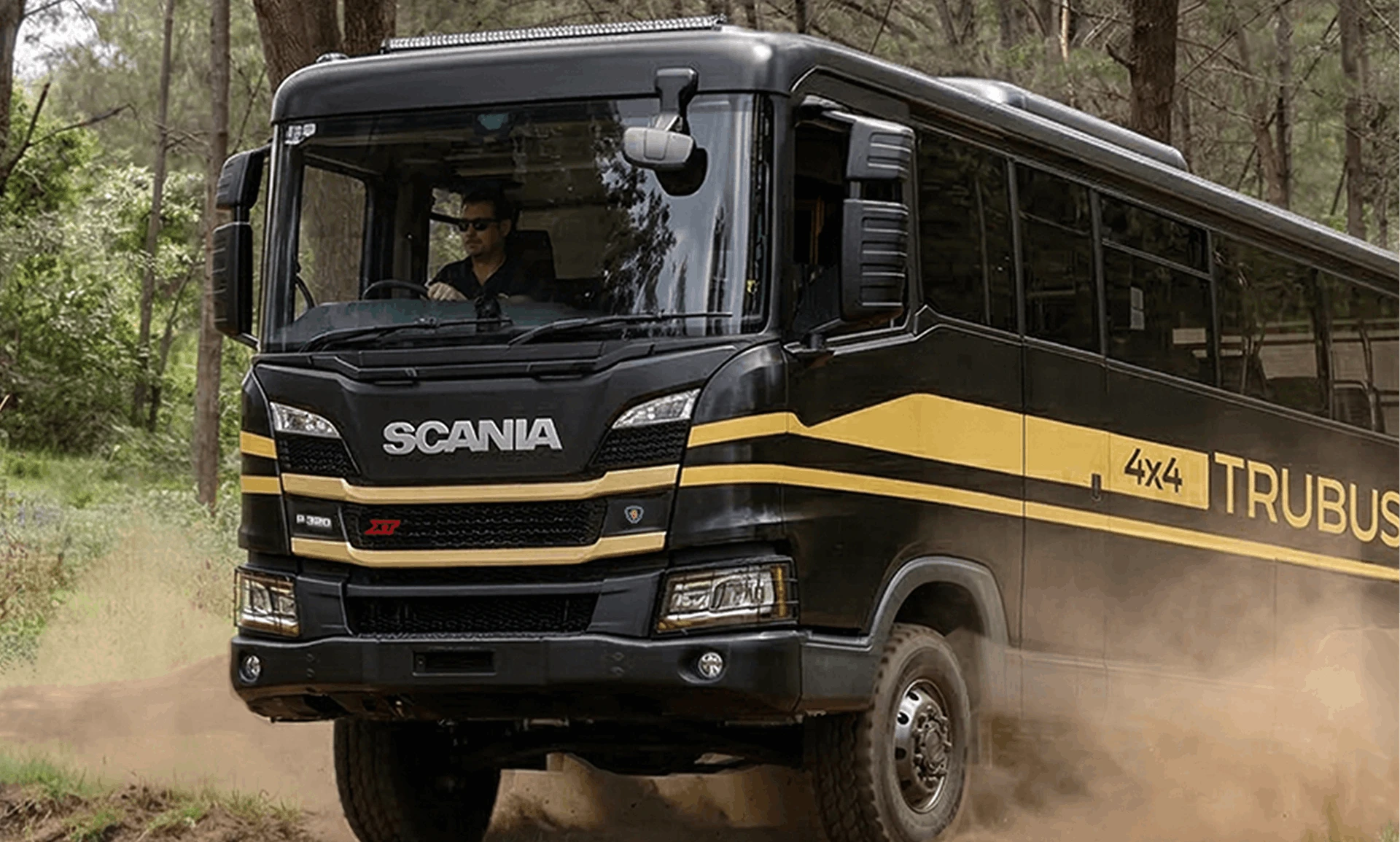
The Trubus uses a Scania 4×4 chassis, with full Scania drivetrain warranty and access to the Scania service network across Australia. That combination of pedigree, warranty, and service is what serious off-road operators should be looking for, regardless of which manufacturer they end up choosing.
Engine layout: front vs rear
This is one of the less-discussed specifications, and one of the most important for off-road work.
Front-engine buses put the engine over the front axle. This gives:
Better weight distribution for off-road traction
Easier engine access for field servicing
Better cooling air flow in dusty conditions
Often lower centre of gravity for the powertrain
Rear-engine buses put the engine at the back. This gives:
Quieter passenger cabin
Lower floor design for easy passenger access
Cleaner styling, especially on highway coaches
For sealed-road coach work, rear-engine layouts are usually the better choice. For genuine off-road operation, front-engine layouts win on almost every metric that matters: traction, serviceability, cooling, and durability.
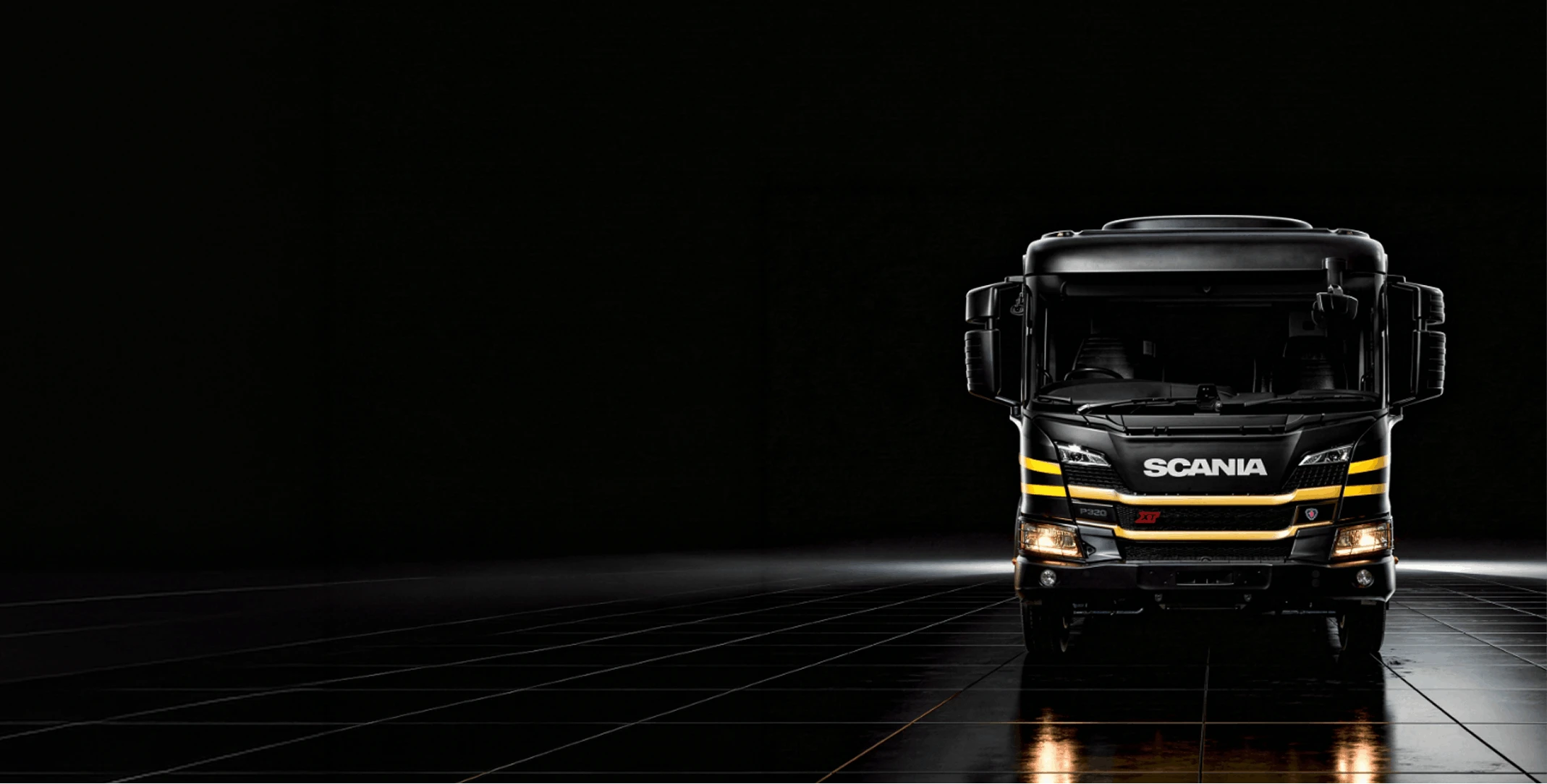
This is one reason the Trubus uses a front-engine layout. The vehicle is designed for the conditions, and the layout reflects that.
Drivetrain: the part that does the work
The drivetrain is what turns engine power into traction across difficult surfaces. Things to evaluate:
4×4 system type. Permanent 4×4, part-time 4×4, or selectable. Each has trade-offs for fuel economy, tyre wear, and off-road capability.
Differential locks. For serious off-road work, locking differentials front and rear can be the difference between getting through and getting stuck. Confirm whether they’re standard, optional, or unavailable.
Transfer case rating. The transfer case is the heart of a 4×4 system. Look at its load rating, its low-range ratio, and its service history.
Transmission. Manual, automatic, or automated manual. Heavy-duty automatics dominate the modern off-road bus segment, but the specification of the transmission matters as much as the type.
Driveshaft and axle pedigree. Look at the rated load, the manufacturer, and the service support.
This is where converted vehicles consistently fall short. Bolting a 4WD system onto a chassis not designed for it creates points of failure that don’t exist on a purpose-built vehicle.
Suspension: what protects passengers and the bus
Suspension does two jobs on an off-road bus: it keeps the vehicle on the road, and it stops the vehicle from being shaken apart by the road.
Look at:
Travel. How far the suspension can move. Critical for absorbing corrugations and washouts.
Load rating. Suspension rated for the loaded weight of the bus, with margin for dynamic loads.
Component pedigree. Heavy-duty commercial suspension components, not modified passenger car parts.
Service support. Suspension wears. The bus you buy will need shocks and bushes replaced. Local availability of those parts matters.
A poorly specified suspension shows up in two ways: passenger discomfort, and accelerated wear on every other part of the bus.
Safety: the underrated specification
Off-road operation creates safety conditions that highway buses don’t face. The bus you buy needs to be designed for them.
Front-engine layout and crash protection. A front-engine layout creates a structural buffer between the front of the vehicle and the passenger cabin. For routes with the risk of head-on incidents with wildlife or other vehicles, this matters.
Rollover protection. Off-road conditions create rollover risk that sealed-road conditions don’t. Check the rollover protection design.
Seat construction and seatbelt rating. Off-road operation puts higher dynamic loads on seats and restraints than highway use. Check the engineering rating, not just the marketing claims.
Driver visibility. Hours of off-road driving in difficult conditions demand excellent driver visibility. Check sight lines, mirror configuration, and camera coverage.
Fire safety. Off-road environments often have fire risk. Check the fire suppression system specification.
For school transport operations specifically, safety standards are particularly demanding. We’re publishing more on the engineering case for front-engine off-road buses in school transport applications later this year.
Body and structure: built to flex without breaking
Off-road operation puts constant flex through the bus body. A body designed for sealed roads will start cracking at welds and panel joins within months.
Look for:
Steel-reinforced structure. Aluminium-only body construction works for some applications but struggles with the loads of genuine off-road operation.
Flexible panel mounting. Body panels need to flex with the chassis without cracking.
Sealed construction. Dust ingress is one of the major causes of premature failure in off-road buses. Check the sealing of doors, windows, and panel joins.
Underbody protection. Stone deflectors, fuel tank guards, and exhaust protection should be standard, not optional.
Climate management. Cooling and dust filtration sized for Australian conditions, not adapted from a European or Asian base specification.
Service and warranty: the part that matters after you’ve signed
The day you sign the contract is the start of the relationship, not the end. Look at:
Service network. How many service centres are within reasonable distance of where the bus will operate? What does mobile service support look like?
Warranty terms. Real warranty covers body and structure, drivetrain, and electrical systems with clear inclusions and exclusions. Vague warranty terms are a warning sign.
Parts availability. How long does it take to get a replacement part to a remote location? Do you keep spares on hand?
Manufacturer accessibility. Can you talk directly to the manufacturer when something goes wrong, or do you have to go through layers of dealership and intermediary?
AutoBus sells direct to businesses, with the body and structure warranty backed by AutoBus and drivetrain warranty backed by Scania for Trubus models. National service coverage supports operations across the major Australian markets.
What to do with the spec sheet
Spec sheets are useful, but they’re a starting point, not a finishing line. Once you have a shortlist of off-road buses to consider:
Inspect them in person. Run your hands over the body. Look at the welds. Check the underbody.
Talk to operators running the same vehicle. Operators don’t lie. Spec sheets sometimes do.
Get warranty terms in writing. Read them carefully.
Test drive the vehicle on a representative surface. A test drive on a sealed road tells you almost nothing about an off-road bus.
Model the total cost of ownership across the operating life. The cheapest sticker price rarely produces the cheapest operating cost.
When to buy used vs new
The off-road bus for sale market is small in Australia, and used vehicles need to be assessed carefully.
A used purpose-built off-road bus from a known manufacturer with verifiable service history can be excellent value. A used “off-road bus” with unclear pedigree, no service history, and unknown chassis modifications is a high-risk purchase.
If you’re considering used, ask:
Who built the vehicle?
What’s the service history?
Has the vehicle had structural modifications?
What’s the chassis condition?
Does the original warranty transfer?
Buying a used off-road bus that turns out to be a converted highway coach with retrofit 4WD components is one of the more expensive mistakes in this market.
Where AutoBus fits
AutoBus builds purpose-designed 4×4 buses for Australian off-road operations. The TRUBUS is a 40+ passenger bus on a Scania 4×4 chassis with a front-engine layout, designed and built for the conditions Australian operators face. An Isuzu-based platform is in development to expand the range.
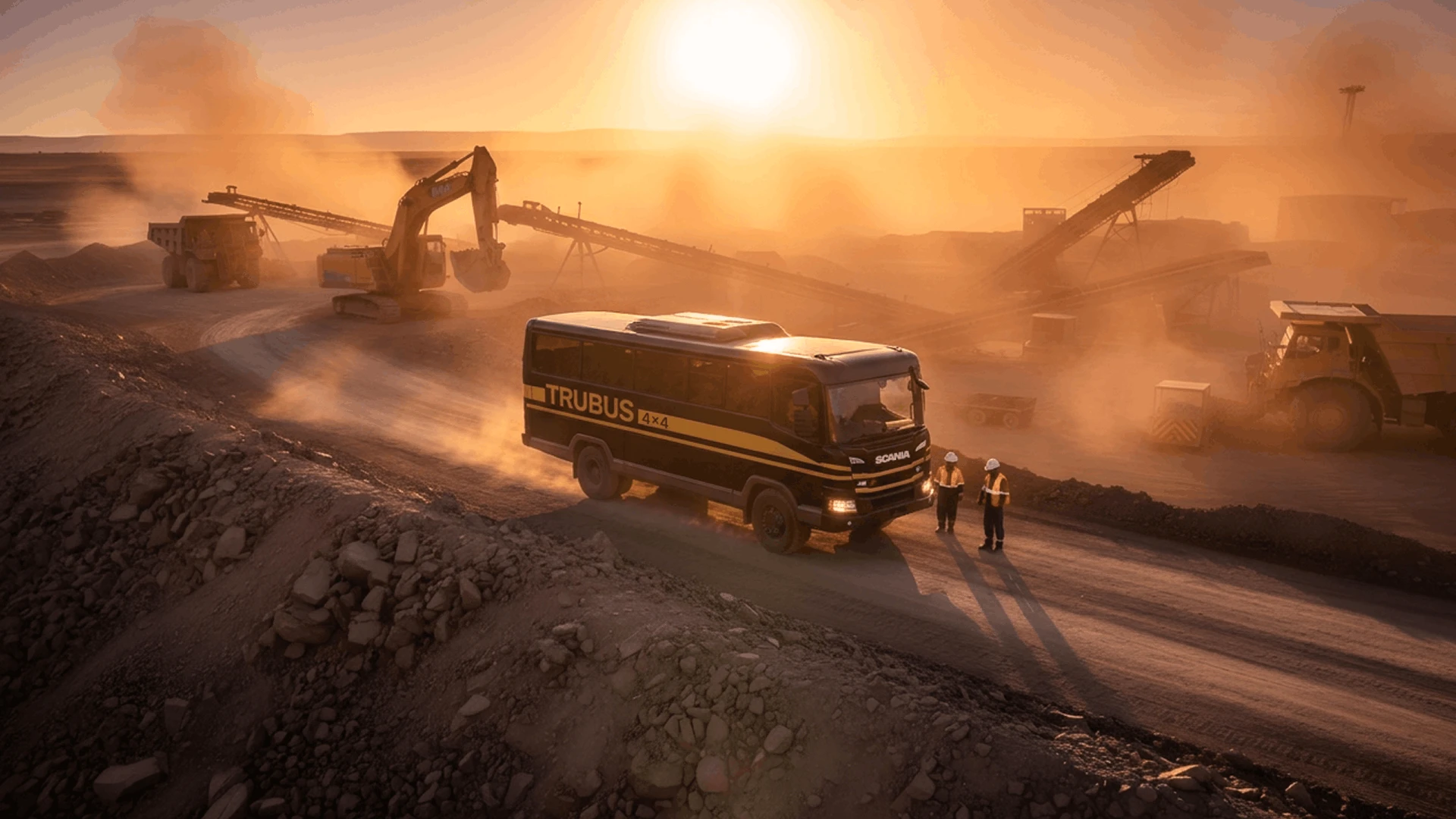
Sales are direct to businesses across mining, renewable energy, schools, defence, emergency services, tourism, and construction. Body and structure warranty is supported by AutoBus, with drivetrain warranty backed by Scania.
If you’re researching off-road buses for an upcoming purchase, the next step is a conversation about your route, your passengers, and your operating conditions.
Get in touch with the AutoBus team to talk through your requirements.