Industries
Apr 15, 2026
The Complete Guide to 4×4 Buses in Australia
Content
Most buses stop where Australia’s real work begins—but a 4x4 bus keeps going. Here’s what to look for, who needs one, and why purpose-built off-road buses outperform retrofits.
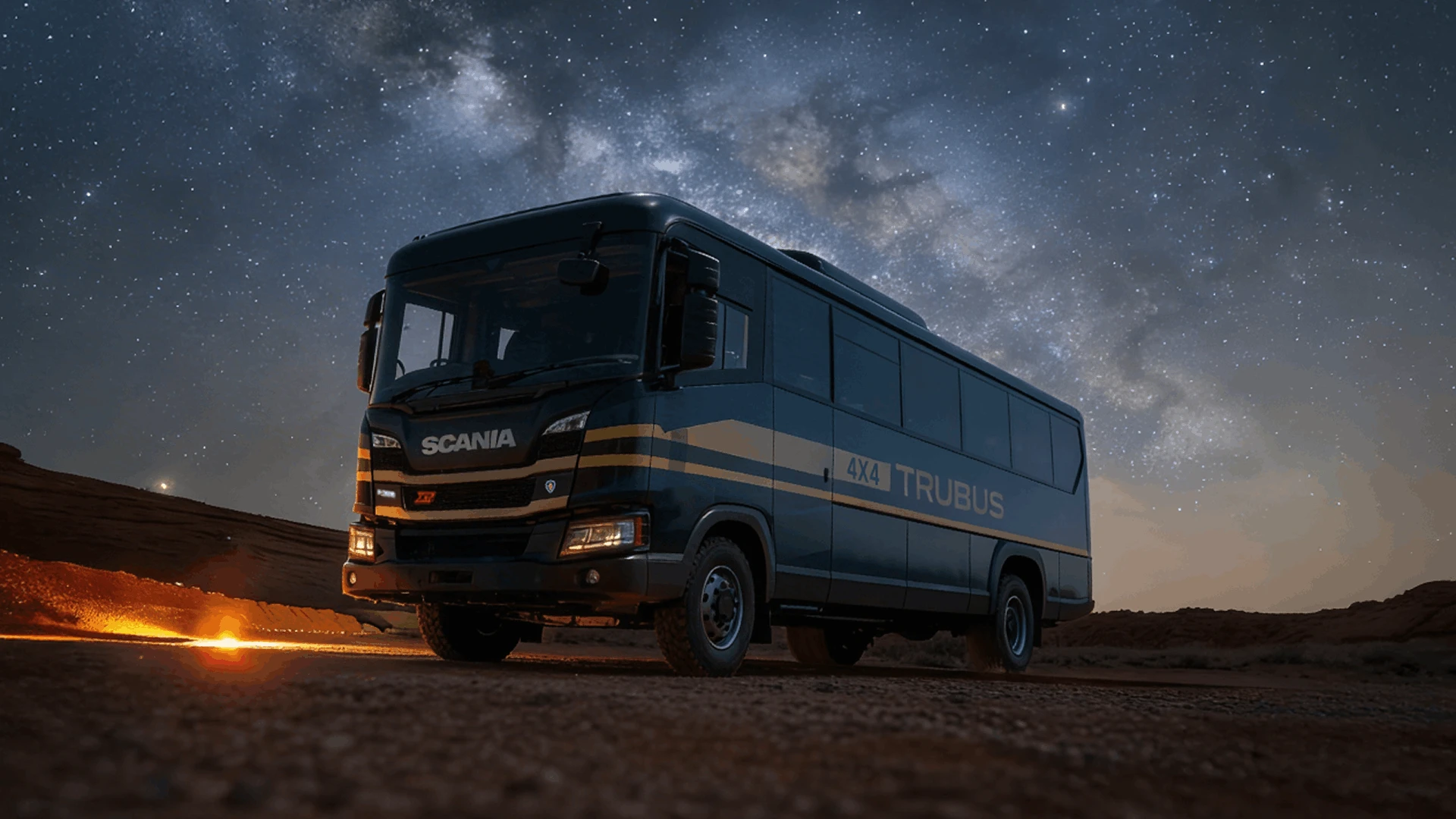
Most buses can’t go where Australian work happens.
A standard coach is built for sealed roads. Smooth bitumen, predictable inclines, no surprises. That works fine for airport transfers and city tours, but it falls over the moment you turn off the highway.
A lot of Australian work happens past that turnoff.
Mine sites in the Pilbara. Remote schools across western Queensland. Tourism operators running guests into national parks. Renewable energy projects on dirt access tracks. Defence personnel moving across training grounds. Every one of these jobs needs to move people, and every one of them needs a vehicle that won’t get stuck, shaken apart, or written off after eighteen months.
That’s where 4×4 buses come in. This guide walks through what they are, who needs one, and what separates a purpose-built 4×4 bus from a regular coach with all-terrain tyres slapped on.
What is a 4×4 bus?
A 4×4 bus is a passenger vehicle with four-wheel drive capability, built or specified to handle terrain that conventional buses can’t. The “4×4” means all four wheels can receive engine power, which gives the vehicle traction across loose surfaces like gravel, sand, mud, and corrugated roads.
Most 4×4 buses in the Australian market sit somewhere between 16 and 40 passengers. Anything smaller is usually a 4WD wagon or troop carrier. Anything larger gets too heavy for genuine off-road work.
The category covers a wide range of vehicles, from converted Land Cruisers to full-size 40+ seat buses built on heavy commercial chassis. The right choice depends entirely on what you’re moving, where you’re moving it, and how often.
Who needs a 4×4 bus?
The market for 4×4 buses in Australia is more diverse than people assume. Six industries account for the bulk of demand:
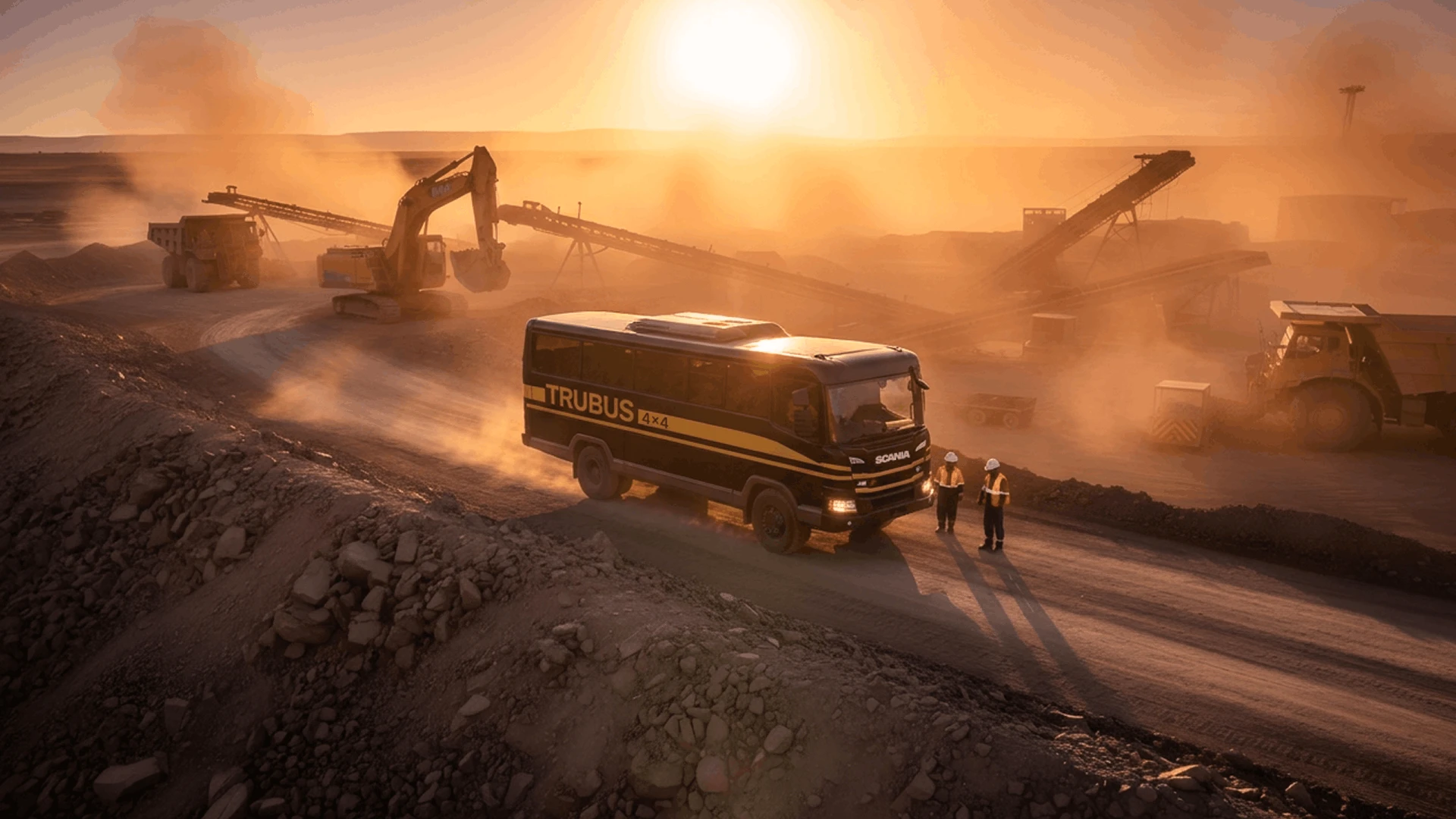
Mining and resources. Crew transport between camp and pit. Long shifts, corrugated haul roads, and a duty of care that doesn’t allow for breakdowns. The cost of a stranded crew bus on a mine site isn’t just the tow. It’s the lost shift, the production hit, and the safety incident waiting to happen.
Renewable energy. Wind farms, solar projects, and battery storage sites are increasingly built in remote locations with poor access roads. Construction crews need reliable transport that can handle the same terrain as the project itself.
Schools and education. Regional and remote schools often run student transport across unsealed roads. Outdoor education programs take students into bush and coastal environments. Safety standards for school transport are non-negotiable, which raises the bar for any 4×4 bus designed for this market.
Defence and emergency services. Military training facilities, search and rescue operations, and bushfire response all need passenger vehicles that can keep working when conditions get serious.
Tourism. Adventure tourism operators in Tasmania, the Top End, and the outback build their offering around access. The 4×4 bus is the difference between a tour that runs and a tour that doesn’t.
Construction and infrastructure. Civil and mining contractors moving crews to remote project sites face the same problem as the mining majors, just at a smaller scale.
If your operation crosses any of these categories or others that are not mentioned but have complex roads, a 4×4 bus stops being a “nice to have” and starts being a core piece of equipment.
Purpose-built vs. converted: why the difference matters
This is where most buying decisions go wrong.
The Australian market has historically offered two things: regular buses with 4WD components retrofitted, or imported vehicles never designed for Australian conditions. Both create the same problem. The chassis, suspension, and drivetrain weren’t engineered to work together as a 4×4 system from day one. So when you push them off the bitumen, things break.
A purpose-built 4×4 bus is engineered from the chassis up to operate in off-road environments. The drivetrain is rated for the loads. The suspension is sized for the corrugations. The cooling system is sized for outback heat. The body is built to handle constant flex without cracking.
The difference shows up in three places:
Reliability. A retrofitted bus might handle a mine road for six months. A purpose-built bus is designed to do it for the next decade.
Total cost of ownership. A cheap retrofit looks cheap on day one. By year three, you’re paying for it in maintenance, downtime, and resale value.
Safety. Components designed to work together fail less often, and fail more predictably when they do. Components bolted together as an afterthought create unknown failure modes.
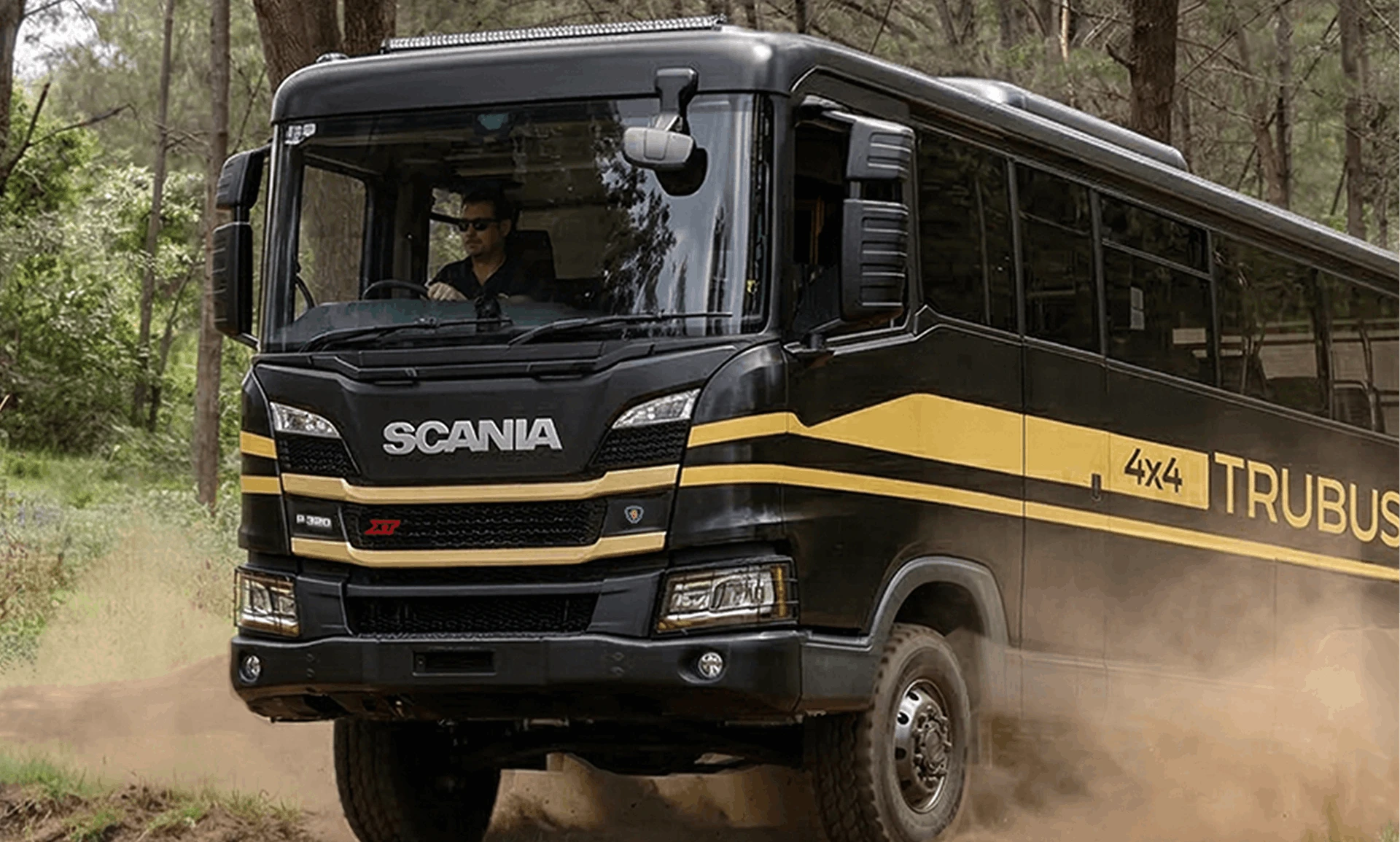
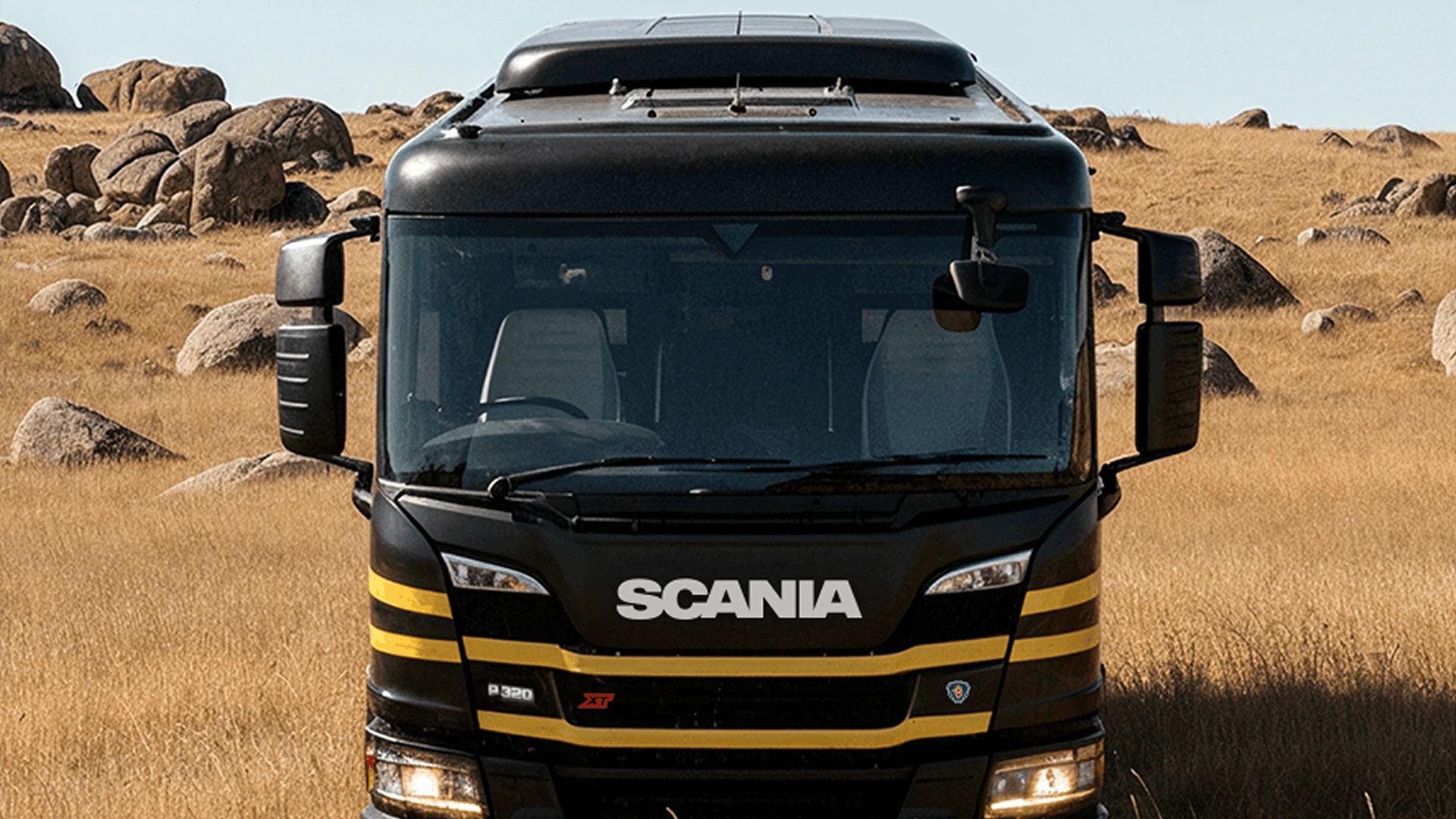
This is the reason the AutoBus team built the Trubus the way it did. Forty-one passengers. Scania 4×4 chassis and drivetrain. Front-engine layout. Every part of the vehicle specified for Australian off-road conditions, not adapted from a European tour coach.
What to look for when buying a 4×4 bus
If you’re in the market, the spec sheet matters less than you’d think. Here’s what to evaluate.
Chassis pedigree. The chassis is the foundation of the vehicle. Look for proven heavy-duty chassis from manufacturers with a track record in commercial vehicle engineering. Scania, Mercedes, MAN, and Isuzu are common references in this market.
Drivetrain integration. Ask whether the 4×4 capability is part of the original chassis specification or added on. The answer changes everything.
Engine layout. Front-engine buses give better weight distribution for off-road work and easier servicing access in the field. Rear-engine layouts make sense for highway coaches but can create problems on rough terrain.
Suspension rating. The suspension is what stops your passengers, and your bus, from being shaken apart. Check the load rating, the travel, and the service history of the components used.
Service network. A bus that can’t be serviced isn’t a bus, it’s a paperweight. Check what national service coverage looks like. Where the parts come from. How long warranty work takes.
Warranty terms. Real warranty terms tell you what the manufacturer believes about their vehicle. Vague terms are a red flag. Clear, vehicle-specific coverage is what you want.
Passenger configuration. Don’t just count seats. Look at seat construction, seatbelt rating, aisle width, headroom, and how the layout works for the actual passengers you’ll be carrying. A mining crew has different needs to a school group.
Real-world references. Talk to operators running the same vehicle in similar conditions. Spec sheets lie. Operators don’t.
The Australian context
Buying a 4×4 bus in Australia comes with conditions you don’t face elsewhere.
The distances are larger. The temperatures are higher. The road surfaces are worse. The service points are further apart. The compliance environment, especially around heavy vehicle standards and chain of responsibility, is more demanding than most international markets.
This is why “imported and adapted” rarely works long-term. A bus designed for European or Asian markets and shipped to Australia will struggle with the heat, the dust, the corrugations, and the sheer distance between service centres. By the time you’ve upgraded the cooling system, the air filtration, the suspension, and the drivetrain components to handle local conditions, you’ve spent more than a purpose-built local vehicle would have cost.
The same logic applies to converted highway coaches. You can put a snorkel and an underbody guard on a tour bus, but the chassis underneath is still a tour bus chassis.
When a 4×4 bus is the wrong answer
It’s worth being honest. Not every operation needs a 4×4 bus.
If your routes are 95% sealed and 5% gravel, a quality 2WD bus with the right tyres might do the job. If you’re moving small crews, a fleet of 4WD wagons might be more flexible. If your sites have permanent good-quality access roads, you might not need 4×4 capability at all.
The 4×4 bus makes sense when:
The terrain genuinely demands it
The passenger numbers justify the size
The operating distances justify the running costs
The reliability requirements rule out alternatives
The duty of care to passengers and crew demands purpose-built capability
If those boxes don’t get ticked, look at other options first.
What’s coming in the Australian 4×4 bus market
The market is in the middle of a shift. A few trends worth watching:
Local design and assembly. Operators are increasingly tired of importing vehicles that don’t suit Australian conditions. Local design is gaining ground, especially in the heavy-duty segment.
Direct-to-business sales. The traditional dealer model is being challenged by manufacturers who deal directly with operators. The benefit is closer technical support, faster spec changes, and clearer accountability when something goes wrong.
Better warranty integration. Vehicle and drivetrain warranties are getting more sophisticated, with clearer coverage across the body, the chassis, and the powertrain.
Multi-vehicle fleets. Operators are moving away from single-spec fleets toward purpose-matched fleets, with different vehicles for different routes and conditions. The 4×4 bus is one part of a wider fleet strategy, not the whole answer.
Lower-emission options. Diesel still dominates the heavy 4×4 bus segment, but operators are starting to ask serious questions about future emissions, fuel costs, and how their fleet decisions look in five and ten years.
Where AutoBus fits
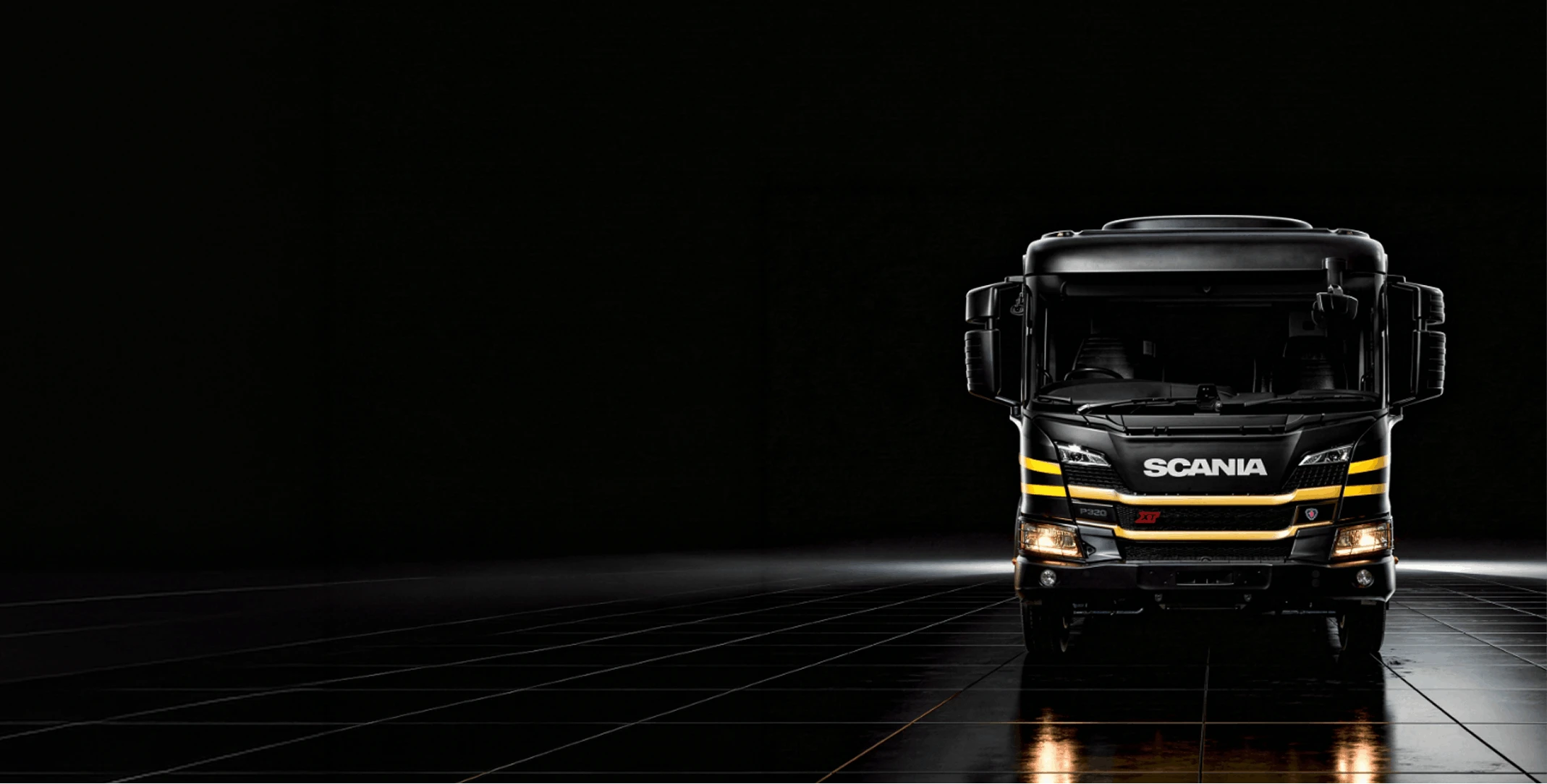
AutoBus is an Australian manufacturer of purpose-built integrated 4×4 buses. The flagship vehicle, the TRUBUS, carries 40+ passengers on a Scania 4×4 chassis with a front-engine layout designed for off-road operation. A second model on an Isuzu platform is in development, expanding the range for operators who need different size or duty profiles.
Vehicles are sold direct to businesses across mining, renewable energy, schools, defence, emergency services, tourism, and construction. Service is supported through a national network of authorised centres.
If you’re weighing up a 4×4 bus for your operation, the next step is a conversation about your specific use case. Different terrain, different passengers, and different duty cycles all change what the right vehicle looks like.
Get in touch with the AutoBus team to talk through your requirements.