Industries
Apr 15, 2026
How to Choose the Right Bus for Your Fleet: A 4×4 Specification Guide
Content
One wrong vehicle can drive most of your fleet’s costs, downtime, and headaches. This guide shows how to get bus fleet management right by matching the right 4×4 bus to each route.
A fleet is only as good as the worst-matched vehicle in it.
You can have nine buses perfectly suited to their routes and one that’s the wrong vehicle for the wrong job. That one bus will dominate your maintenance reports, drive your driver complaints, and consume a disproportionate share of your fleet manager’s week.
Good bus fleet management isn’t about finding “the best bus.” It’s about matching the right vehicle to the right route, then managing the resulting fleet across a 7-to-10-year operating life.
This guide walks through how to think about that process for operators running 4×4 and off-road bus fleets in Australia.
If you’re earlier in the research process, our Complete Guide to 4×4 Buses in Australia covers the basics of the category.
Step one: map your routes before you spec your buses
Most fleet decisions go wrong at the start, when operators try to specify a “fleet vehicle” without first understanding the routes that fleet will run.
Before any bus is specified, document for each route:
Total daily kilometres
Sealed vs unsealed split
Worst surface condition encountered
Maximum gradient, loaded
Daily passenger load
Operating hours per day
Distance from nearest service centre
Climate range
Any site-specific compliance requirements (mining, defence, education)
This route mapping is the input to every subsequent decision. Skip it and you’ll specify vehicles based on assumptions about your operation rather than the operation itself.
Step two: group routes by demand profile
Once routes are mapped, look for clusters. Most fleets fall into three or four route profiles, even when individual routes look different on the surface.
Common profile clusters:
Heavy 4×4 routes. Mining haul roads, remote tourism, defence training grounds, remote project sites. Demand: full off-road capability, high passenger capacity, severe-duty drivetrain.
Mixed sealed and unsealed routes. Regional schools, regional health, mid-tier tourism, rural community transport. Demand: capable 4×4 system, comfortable passenger experience, moderate to high passenger capacity.
Mostly sealed regional routes. Long-distance crew transport on sealed roads with occasional unsealed access. Demand: highway efficiency with off-road backup capability.
Light-duty access routes. Short trips on mixed surfaces with low passenger numbers. Demand: smaller vehicles, flexibility, lower capital cost.
A fleet running across multiple profiles needs different vehicles for different jobs. Trying to use one specification across all profiles produces compromises in every direction.
Step three: match vehicle specifications to profile
This is where the spec sheet becomes useful, but only after the route work is done.
For heavy 4×4 routes, the requirement is:
Heavy commercial chassis (Scania, MAN, Mercedes, Isuzu)
Full 4×4 drivetrain with locking differentials
Front-engine layout for serviceability and traction
Severe-duty suspension
Heavy-duty body construction
Industry-specific safety systems (mining, defence, tourism)
For mixed sealed and unsealed routes, the requirement is:
Capable 4×4 chassis with on-road compromise
Lower drivetrain spec acceptable for occasional off-road use
Comfortable passenger configuration
Moderate severe-duty rating
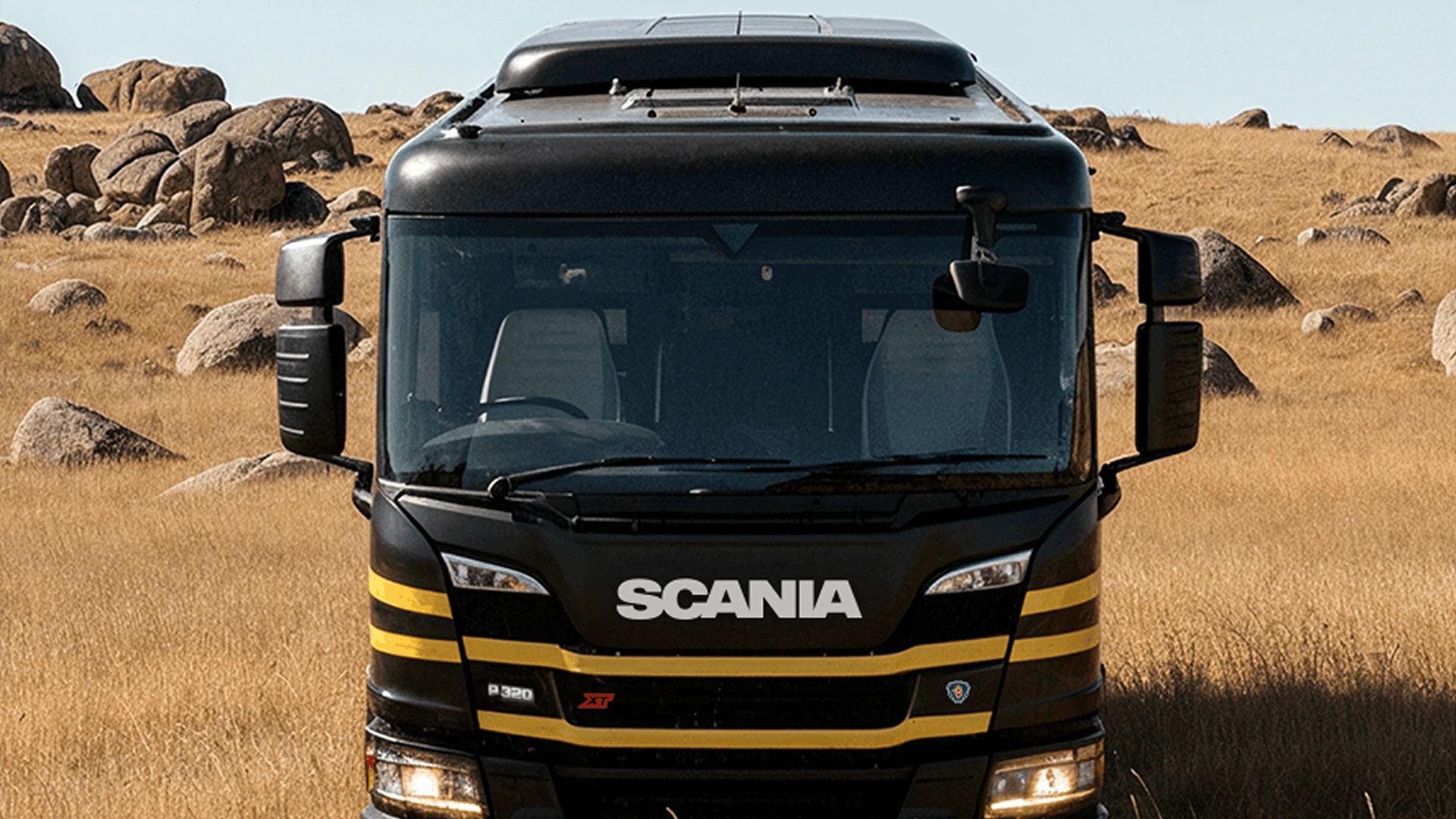
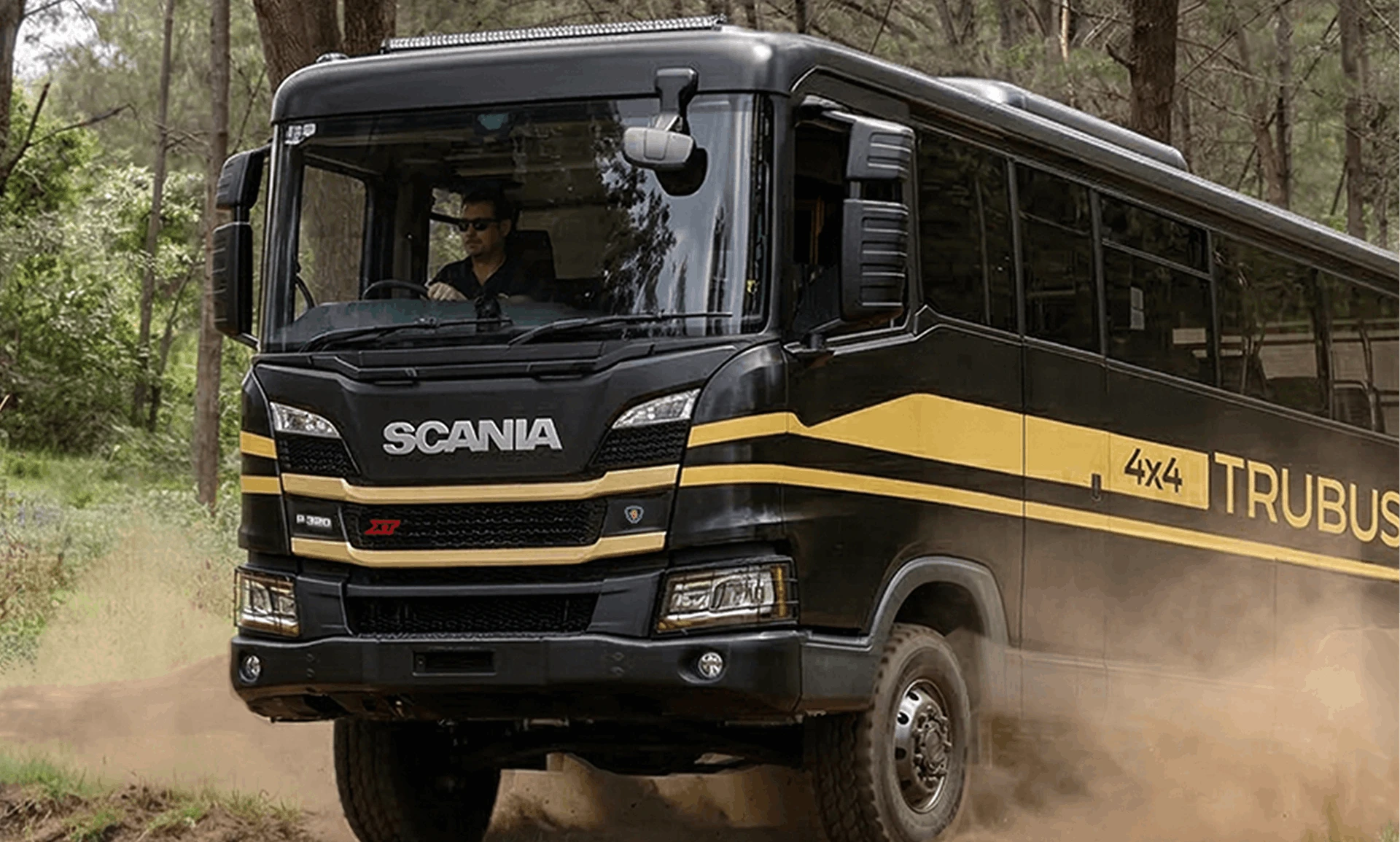
The TRUBUS from AutoBus, with its 40+ passenger Scania 4×4 platform, sits firmly in the heavy 4×4 category. The Isuzu-based vehicle currently in development will extend the range into the mixed sealed and unsealed category, where some operators need a slightly different size and capability profile.
Step four: total cost of ownership, not sticker price
This is the part most fleet decisions get wrong.
The cheapest bus on day one is rarely the cheapest bus across its operating life. A serious bus fleet management process models total cost of ownership across the full 7-to-10-year operating window.
The components to model:
Capital cost. Vehicle purchase price, configuration costs, financing costs.
Fuel. The largest variable cost on most heavy bus fleets. Function of engine choice, gearing, route profile, and driver behaviour. Run sensitivity analysis on diesel price scenarios across the operating life.
Servicing. Scheduled service costs, parts, labour, and the cost of moving the bus to and from a service centre. Remote operations need to model travel time and distance to service.
Tyres. A larger cost than most fleet managers expect, especially on off-road operations. Mining-grade tyres on a heavy bus running corrugated roads can produce surprisingly fast wear.
Repairs. Unscheduled maintenance costs based on chassis pedigree, build quality, and operating conditions.
Downtime. The cost of crew or passenger transport disruption when a bus is off the road. This is often the largest hidden number.
Insurance. Function of vehicle value, operator profile, and route risk.
Driver costs. Driver pay, training, and turnover. Vehicles that are difficult or uncomfortable to drive increase turnover.
Compliance. Cost of meeting regulatory and site-specific compliance requirements over the operating life.
Resale or end-of-life value. A purpose-built vehicle from a reputable manufacturer holds value. A converted vehicle with unclear pedigree depreciates harder.
A 10-year TCO model usually shows that the highest-quality vehicle is the lowest-cost vehicle across its full operating life. This is the rule, not the exception.
Step five: a fleet management system that works
A small fleet of 5 to 10 buses can be managed in a spreadsheet. A larger fleet needs a proper bus fleet management system.
What good fleet management software does:
Tracks vehicle utilisation, kilometres, and hours
Schedules service and maintenance
Logs faults and unscheduled repairs
Tracks driver assignments and shift patterns
Manages compliance documentation
Produces TCO reporting across the fleet
Integrates with telematics for real-time vehicle data
The market for fleet management software is mature, with both standalone systems and modules within wider transport management platforms. The right system depends on fleet size, fleet diversity, and integration requirements with existing systems.
For operators running heavy 4×4 buses across remote Australia, the most important features are usually around predictive maintenance and remote diagnostics. A bus that signals an issue 48 hours before it becomes a breakdown is worth a significant amount of money.
Step six: build the warranty and service relationship in
The fleet exists in a service ecosystem. The strength of that ecosystem affects daily operations.
Look for:
Direct manufacturer relationships. Where possible, work with manufacturers who sell direct to businesses rather than through dealer networks. The benefit is faster technical support, clearer accountability, and usually better warranty handling.
National service coverage. Heavy bus fleets often operate across state lines. Service support that works in only one state is a problem.
Warranty clarity. Body, chassis, drivetrain, and electrical warranty terms should be clear and specific. Vague terms cause disputes when claims happen.
Parts availability. How long it takes to get a replacement part to a remote location is a fleet management metric, not just a procurement one.
AutoBus operates a direct-to-business sales model with national service coverage. Trubus models carry AutoBus body and structure warranty alongside Scania drivetrain warranty, providing clear coverage across the vehicle.
Step seven: plan the fleet refresh cycle
A fleet doesn’t exist as a snapshot. It exists as a rolling pipeline of vehicles at different ages.
Good fleet planning looks 5 to 10 years forward and asks:
What’s the optimal fleet size given current and projected demand?
What’s the right replacement cycle for each vehicle profile?
How do we sequence purchases to smooth capital spend?
What technology shifts (emissions, drivetrain, autonomy) need to be factored in?
What does our fleet look like in 2030, 2032, 2035?
A fleet that’s all bought in the same 18-month window will need to be all replaced in the same 18-month window. That creates capital lumps that are difficult to manage. Better to plan a rolling refresh that spreads spend.
Common fleet management mistakes worth avoiding
A few patterns that come up regularly:
Buying too cheap. Trying to save 15% on capital cost and paying 30% more in operating cost across the life of the vehicle.
Specifying for headquarters, not the field. Specs that look impressive in head office but don’t suit the actual operating conditions.
Ignoring the driver experience. Vehicles that are difficult or uncomfortable to drive create turnover and safety issues that don’t show up on TCO models until it’s too late.
Single-vendor lock-in without due diligence. Long-term commitment to a single vehicle manufacturer or chassis source without checking the long-term competitive landscape.
Underspending on fleet management systems. Trying to manage a 30-bus fleet in a spreadsheet costs more in operational inefficiency than the fleet management system would have cost.
Treating the fleet as static. Failing to plan for refresh, technology change, and demand shifts.
Where AutoBus fits
AutoBus builds purpose-designed 4×4 buses for Australian operators across mining, renewable energy, schools, defence, emergency services, tourism, and construction. The flagship Trubus is a 40+ passenger bus on a Scania 4×4 chassis with a front-engine layout, supported by AutoBus body and structure warranty and Scania drivetrain warranty. An Isuzu-based platform is in development to extend the range for operators with different size or duty profiles.
Vehicles are sold direct to businesses, with technical support and configuration changes handled by the manufacturer rather than a dealer intermediary. National service coverage supports operations across the major Australian markets.
If you’re scoping a fleet purchase or planning a fleet refresh, the next step is a conversation about your routes, your demand profile, and your fleet planning horizon.
Get in touch with the AutoBus team to start the conversation.